Choosing Your Species
The species you plant determines your carbon earnings, your options, and your obligations for decades to come. This is one of the most important decisions in carbon farming.
The Big Picture
Carbon is carbon — the ETS doesn’t pay more for one species than another. But different species:
- Grow at different rates
- Earn credits at different speeds
- Have different management requirements
- Suit different sites and climates
- Come with different long-term options
Exotic Species
Radiata Pine (Pinus radiata)
The dominant choice. Around 90% of New Zealand’s plantation forestry is radiata pine. There’s a reason.
Advantages:
- Fast growth — peak sequestration years 8-20
- Well-understood carbon curves
- Established look-up tables by region
- Commercial timber value
- Easy to establish
- Tolerates a range of sites
Considerations:
- Fire risk (especially in northern regions)
- Disease pressure (dothistroma needle blight)
- Not permanent — typically harvested at 25-30 years
- Community resistance in some areas
- LUC class restrictions on productive land
Carbon earning: ~25-30 tonnes CO₂/ha/year in peak growth. Under averaging, earns to ~age 16.
Douglas Fir
A premium alternative for cooler, higher-rainfall sites.
Advantages:
- High-quality timber
- Excellent carbon sequestration
- Good for South Island and elevated sites
- Better suited to some sites than radiata
- Premium timber value
Considerations:
- Slower early growth than radiata
- More site-specific in requirements
- Less established local market
- Higher establishment cost
Carbon earning: Good sequestration, particularly on suitable sites. Different lookup table from radiata.
Eucalyptus Species
For warm, sheltered sites — particularly Northland and coastal areas.
Advantages:
- Very fast growth on the right sites
- Some species have good timber value
- Carbon earnings can be rapid early on
- Different aesthetic than pines
Considerations:
- Site-specific — need warmth and shelter
- Fire risk
- Some species prone to damage
- Less established in NZ
- Variable timber markets
Other Exotics
Redwoods, cypresses, and other species are used in smaller quantities. They can be registered but may use generic “other exotic” lookup tables, which are often conservative.
Native Species
Why Choose Natives?
Advantages:
- No LUC class restrictions
- Permanent forest category suits them
- Biodiversity and ecosystem benefits
- No harvest liability to manage
- Cultural and environmental value
- Lower fire risk than pines
- No replanting requirement
Considerations:
- Slower growth = slower earnings
- Higher establishment costs (usually)
- All natives grouped in one lookup table
- Less carbon per hectare than exotics (initially)
- Long timeframe to significant returns
Common Native Approaches
Planted natives:
- Establish forest with nursery-raised plants
- Higher upfront cost
- Faster establishment than natural regeneration
- Can choose species mix
Natural regeneration:
- Allow native bush to recover naturally
- Low/no establishment cost
- Slower but cost-effective
- Common on retired farmland
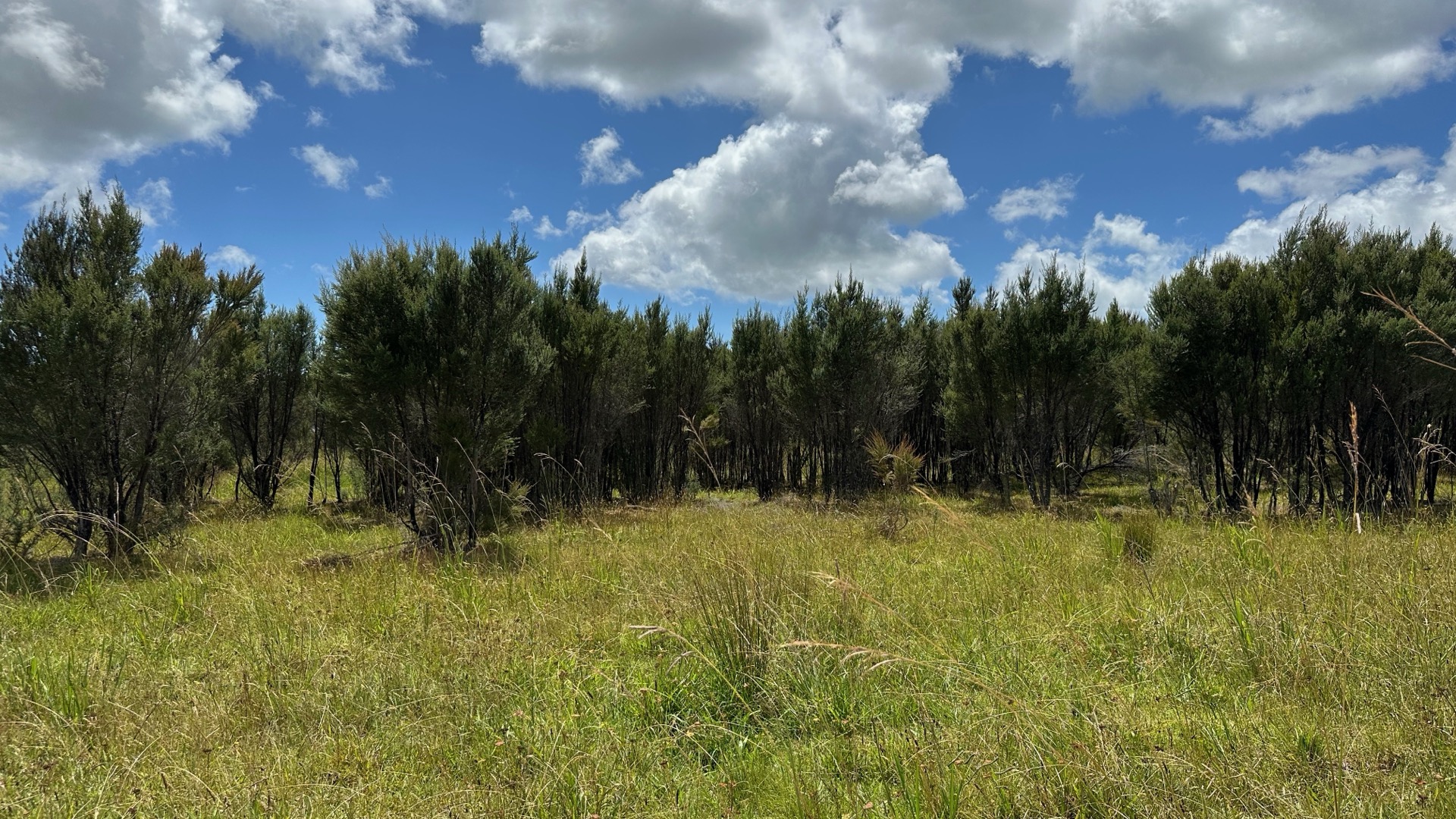
- Gorse/broom can act as nurse crop
Transitional forests:
- Shrubland evolving to forest
- Kanuka/manuka to broadleaf transition
- Register and earn as it develops
Native Carbon Rates
Native forests sequester around 6-7 tonnes CO₂/ha/year on average — roughly one-quarter of radiata pine’s peak rate. But they keep earning for 50+ years and store carbon permanently.
Over long timeframes, well-managed native forest can accumulate substantial carbon stocks — the difference is timing, not ultimate potential.
Comparing Options
| Factor | Radiata Pine | Douglas Fir | Native Forest |
|---|---|---|---|
| Growth rate | Fast | Medium | Slow |
| Peak CO₂/ha/yr | 25-30 | 20-25 | 6-7 |
| Averaging age | ~16 years | ~18-20 | ~30+ |
| Typical rotation | 25-30 years | 40-50 years | Permanent |
| Timber value | Yes | Yes (premium) | Limited |
| LUC restrictions | Yes | Yes | No |
| Fire risk | Higher | Medium | Lower |
| Biodiversity | Low | Low | High |
| Permanence | No | No | Yes |
Site Matching
The right species depends on your site:
Warm, lower altitude, good rainfall: Radiata pine, eucalyptus, or natives
Cool, elevated, higher rainfall: Douglas fir, some native species
Dry, exposed: Careful species selection, possibly natives adapted to the site
Steep, erosion-prone: Natives often preferred for permanent cover, or pines for soil stabilisation
Riparian (stream margins): Natives strongly preferred for water quality and biodiversity
Regional Considerations
Different regions have distinct conditions that affect species performance and risk profile.
Northland / Far North
Climate: Warm, humid, drought-prone summers
Key considerations:
- Fire risk is highest in New Zealand — summer droughts create extreme fire danger
- Eucalyptus can perform well but increases fire risk
- Native regeneration (especially kauri, taraire, puriri) suits the climate
- Subtropical pests and diseases more prevalent
- Kikuyu grass competition during establishment
Best suited: Natives for permanence; radiata with excellent fire management
Auckland / Waikato
Climate: Warm, moderate rainfall
Key considerations:
- Good growing conditions for most species
- Urban-rural interface creates fire ignition risk
- Strong community interest in natives near population centres
- Good infrastructure for forestry operations
Best suited: Radiata, natives, or mixed approaches
Bay of Plenty / Gisborne / Hawke’s Bay
Climate: Warm, variable rainfall, cyclone exposure
Key considerations:
- Cyclone damage risk (Gabrielle demonstrated this in 2023)
- Some of the best radiata growing country
- Erosion-prone hill country — permanent natives valuable
- Well-established forestry industry and infrastructure
Best suited: Radiata on stable sites; natives on erosion-prone land
Central North Island (Taupo / Rotorua)
Climate: Cooler, volcanic soils, good rainfall
Key considerations:
- Excellent radiata country — volcanic soils support rapid growth
- Lower fire risk than northern regions
- Established forestry industry
- Some geothermal/volcanic considerations in specific areas
Best suited: Radiata pine (prime growing region)
Wellington / Wairarapa / Manawatu
Climate: Windy, moderate temperatures, variable rainfall
Key considerations:
- Wind exposure affects species choice and harvest risk
- Windthrow more common than fire as a risk
- Douglas fir suits some cooler elevated sites
- Native regeneration common on retired hill country
Best suited: Radiata in sheltered areas; natives on exposed sites
Nelson / Marlborough
Climate: Sunny, dry summers, moderate winters
Key considerations:
- Fire risk in dry summers
- Excellent Douglas fir country
- Good radiata country in many areas
- Wilding pine issues from spread into conservation land
Best suited: Douglas fir on suitable sites; radiata with fire management
Canterbury / West Coast
Climate: Canterbury dry and easterly; West Coast very wet
Key considerations:
- Canterbury: Drought stress, irrigation sometimes needed, lower growth rates
- West Coast: Very high rainfall, some of the best Douglas fir country
- Canterbury plains face wind exposure
- Snow damage possible at higher elevations
Best suited: Douglas fir (especially West Coast); radiata in suitable Canterbury locations
Otago / Southland
Climate: Cool, variable — from dry Central Otago to wet Southland
Key considerations:
- Snow damage risk at higher elevations
- Slower growth rates than North Island
- Central Otago very dry — challenging for forestry
- Southland can be excellent for radiata and Douglas fir
- Lower fire risk generally
Best suited: Douglas fir; radiata in suitable Southland locations; natives for conservation
Regional Lookup Tables
Remember that radiata pine has region-specific lookup tables. The same age forest earns different carbon amounts depending on region — reflecting actual growth rate differences.
| Region | Relative Growth Rate |
|---|---|
| Bay of Plenty | High |
| Central North Island | High |
| Northland | Medium-High |
| Auckland | Medium-High |
| Gisborne | Medium |
| Hawke’s Bay | Medium |
| Nelson/Marlborough | Medium |
| Canterbury | Lower |
| Southland | Medium |
This affects your earnings calculation, so understanding your region’s table matters
Mixed Planting
You don’t have to choose just one species. Options include:
Mosaic planting: Different species in different areas based on site conditions. Register each area separately.
Transition zones: Exotics on main areas, natives on margins and waterways.
Nurse crop approach: Pines or wattles as nurse crop, transitioning to natives over time.
Integrated blocks: Mix of species within the same area for resilience and diversity.
The Financial Lens
If maximising short-term carbon income is your goal, radiata pine wins. Fast growth, well-understood curves, and peak earnings in years 8-20 make it the clear commercial choice.
But if you’re thinking longer-term:
- Natives in permanent forestry can earn for 50+ years
- No harvest liability to manage
- Additional revenue potential (e.g., honey, tourism)
- Land remains flexible if rules change
Many landowners plant exotics on productive carbon areas and natives on margins, waterways, and less accessible slopes.
Getting Advice
Species selection should consider:
- Your site (soil, climate, aspect, altitude)
- Your goals (income timing, permanence, biodiversity)
- Regulatory context (LUC class restrictions)
- Practical factors (access, pest pressure, fire risk)
- Your personal values
We can help you assess your land and develop a planting strategy that balances carbon returns with your other objectives.
Key Takeaways
- Radiata pine dominates for a reason — it’s fast and well-understood
- Natives have no LUC restrictions and suit permanent forestry
- Match species to site — wrong species fail
- Carbon rates vary — but carbon is carbon in the ETS
- Consider the full picture — timber, biodiversity, fire risk, long-term options
- You can mix — different species on different areas